How to Make Fresh Herb Butter: Three Easy Recipes
Plain butter is a workhorse. Herb butter is a small luxury you can make in ten minutes with a bowl, a knife and whatever is growing outside the back door. The idea is simple: decent butter, finely chopped herbs, a pinch of salt and something sharp or sweet to lift the whole thing. Get that balance right and you have something that turns a baked potato into dinner, finishes a steak properly and rescues a dull piece of fish. All three butters below use the same method, so once you have made one you can make any of them.
The base: good butter, a sharp knife, dry herbs
Start with unsalted butter. It lets you taste as you go and season properly, and it takes on herb flavours without competing with them. Salted butter works fine too — just cut the added salt to a quarter teaspoon per 250g block, then taste again before you roll.
Room temperature matters more than any ingredient. Butter left out for an hour or two beats butter softened in a microwave every time; melted butter will never come back, and you will end up with a greasy, split mess. Cut the block into cubes and leave it in a warm kitchen while you pick and chop. Herbs need to be dry, too — wash them earlier in the day or pat them thoroughly with kitchen paper, because water on the leaves turns into water in the butter and shortens its keeping time.
You do not need much kit:
- A bowl and a fork or wooden spoon (or a small food processor, pulsed gently)
- A sharp knife and a chopping board
- Clingfilm, baking parchment or small ramekins
- Fine sea salt, plus pepper, lemon zest or juice, mustard, honey or garlic as the recipe asks
Three butters to try
1. Chive and parsley butter
Make this one first. It is fresh rather than fierce and suits almost everything.
- 250g unsalted butter, softened
- 3 tbsp chives, snipped finely with scissors
- 2 tbsp flat-leaf parsley, chopped
- 1 tsp lemon juice or a good pinch of zest
- ¼ tsp fine sea salt, plenty of black pepper
Mash the butter with the fork until spreadable, then fold in everything else. Taste it on a piece of bread — seasoning seems stronger on plain butter than it does in the bowl. Snip chives rather than chopping them; a knife bruises them and they discolour overnight.
2. Lemon thyme and garlic butter
Good melted over fish, prawns or a whole roast chicken, and very good stirred through hot rice.
- 250g unsalted butter, softened
- 1 tbsp lemon thyme leaves, stripped from the stems and chopped
- 1 small garlic clove, grated or crushed to a paste
- Zest of one lemon
- ½ tsp fine sea salt
Woody herbs need a finer chop than soft ones; run the knife through until no piece is bigger than a grain of rice. Add the garlic a little at a time, taste, and stop before it dominates — raw garlic gets sharper as the butter sits. For a softer flavour, roast a whole head first and mash a few cloves in.
3. Rosemary and honey butter
Sweet, resinous and made for roast carrots, parsnips and squash, or spread on warm soda bread.
- 250g unsalted butter, softened
- 2 tsp rosemary, chopped as finely as you can manage
- 2 tsp runny honey
- ½ tsp fine sea salt
- Optional: a little orange zest
Rosemary is powerful, so two teaspoons is plenty for a whole block. Mix the honey in last so you can judge the sweetness, and be generous with the salt — the honey will pull it back.
Rolling, shaping and storing
Spoon the butter onto a sheet of clingfilm or baking parchment and shape it into a rough log. Roll the paper tightly around it and twist the ends like a sweet wrapper, then chill for at least two hours until firm. After that you can slice it into coins as you need them. Small ramekins, silicone ice-cube trays and a star nozzle on a piping bag all work if you would rather not make a log.
- Fridge: wrapped tightly, one to two weeks. Garlic butters are best eaten within a week.
- Freezer: up to three months. Slice the log before freezing so you can take out one coin at a time, and label it with the flavour and date.
- On the table: a few hours at room temperature is fine for serving. Put it back in the fridge afterwards.
Ways to serve herb butter
A flavoured butter is a finishing touch rather than a cooking fat. Herbs burn quickly in a hot pan, so add it at the end or let the heat of the food do the work.
- Sliced over hot new potatoes, sweetcorn or a baked potato
- Melted on steak, chops or grilled fish straight from the pan
- Pushed under chicken skin before roasting
- Stirred through pasta, rice or scrambled eggs off the heat
- Spread on crusty bread, scones or soda bread
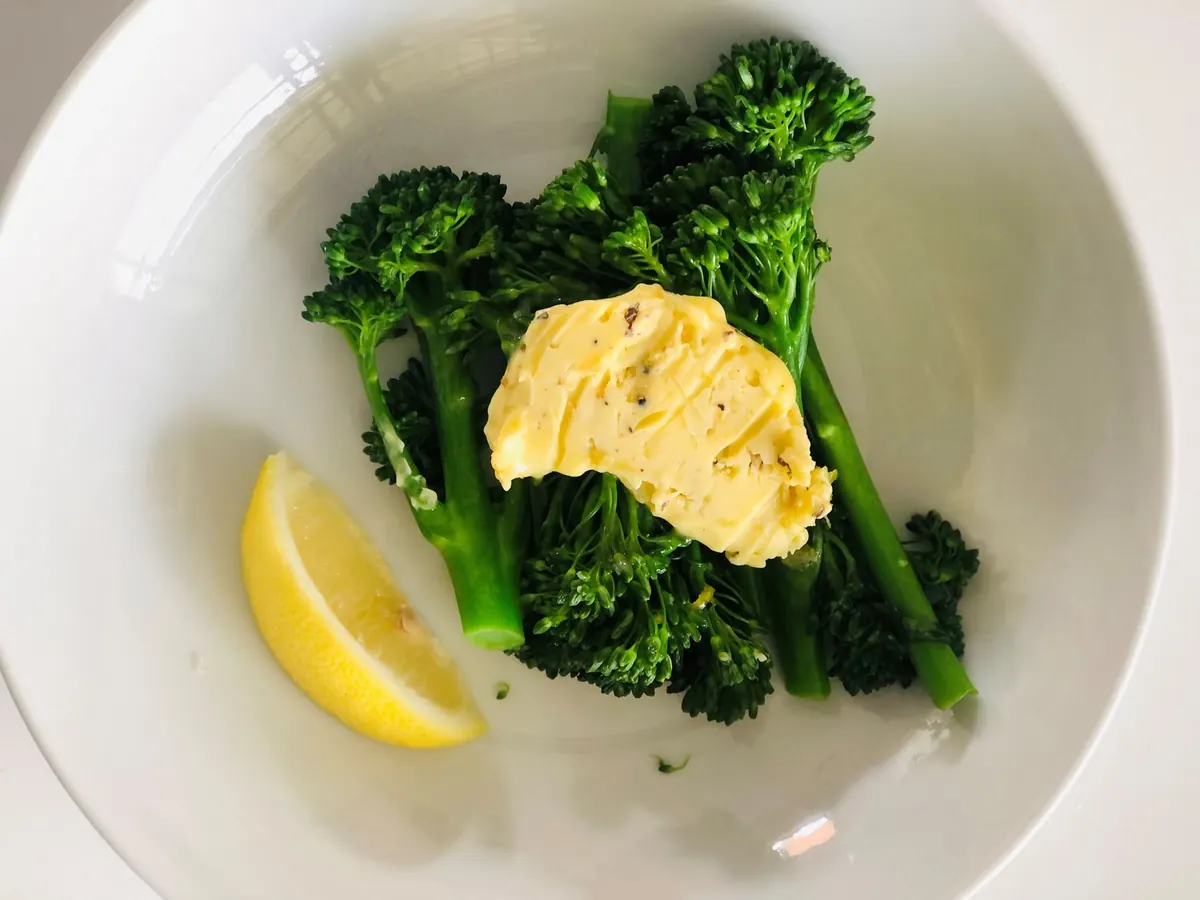
- Melted over purple sprouting broccoli, green beans or peas
When it goes wrong
- It tastes flat. Almost always salt, then acid. Add a pinch more salt and a squeeze of lemon.
- It weeps or separates. The butter was too warm, or the herbs were still wet.
- The herbs look tired after a day. Basil, mint and chives bruise easily. Use the sharpest knife you have, or scissors, and keep the butter cold.
- Too much garlic. Leave it a day and it will mellow a little, or use less next time and mix the rest into mashed potatoes.
A batch before the herbs bolt
Herb butter is at its best in late spring and early summer, when chives are lush, parsley is in its prime and thyme is pushing out new leaves. Make a log on a Sunday afternoon, keep one in the fridge and one in the freezer, and you have garden flavour on hand well into winter. Mint, coriander and basil all work, though they fade faster — basil butter is worth making in high summer and eating within a few days. Start with the chive version, then adjust as your own patch tells you to.
Photo: Mi Butter SA / Pexels